
Slot Volatility Explained: What Every Online Casino Player Should Know
When playing online slots, many players focus on themes, bonus features, or jackpots. However, one of the most important factors influencing your experience is slot volatility, also known as slot variance. Understanding volatility helps you choose games that match your budget, playing style, and expectations.
Some slots offer frequent but smaller payouts, while others may go dozens of spins without a win before delivering a significant reward. Neither approach is better than the other—they simply create different gaming experiences.
In this guide, we’ll explain what slot volatility is, how it works, the different types of volatility, and how to choose the right slot for your bankroll.
What Is Slot Volatility?
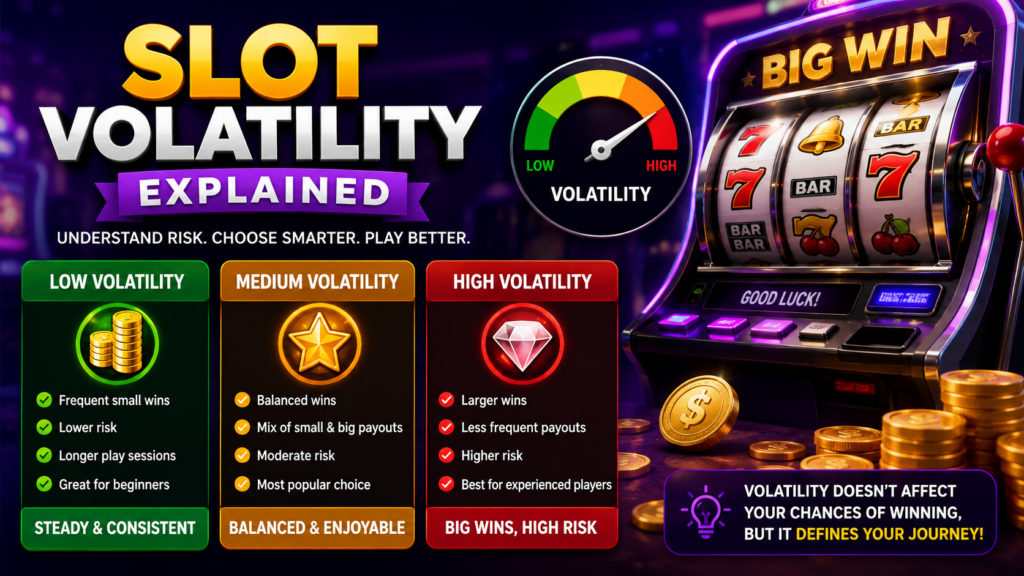
Slot volatility refers to the level of risk associated with a slot game. It describes how often a slot pays out and the typical size of those payouts.
Generally, slot volatility falls into three categories:
- Low Volatility
- Medium Volatility
- High Volatility
Volatility does not determine whether a slot is fair or unfair. Instead, it affects how rewards are distributed throughout gameplay.
For example:
- A low-volatility slot may provide regular wins, but they are usually smaller.
- A high-volatility slot may produce fewer winning spins, but the payouts can be much larger.
Understanding this difference can help players select games that suit their preferences.
Low Volatility Slots
Low-volatility slots are designed to provide frequent payouts. Although these wins are generally modest, they help maintain your bankroll and extend playing time.
Advantages
- More frequent winning spins
- Lower risk during longer sessions
- Better for beginners
- Suitable for players with smaller budgets
Potential Drawbacks
- Large jackpot wins are less common
- Bonus features may offer smaller rewards
These games are often preferred by players who enjoy steady gameplay rather than chasing massive prizes.
Medium Volatility Slots
Medium-volatility slots strike a balance between risk and reward.
Players can expect a mix of regular wins along with occasional larger payouts. This category appeals to many players because it provides entertainment without the long dry spells often associated with high-volatility games.
Best For
- Casual players
- Balanced bankroll management
- Longer gaming sessions
- Players looking for moderate excitement
Medium-volatility slots are among the most popular choices because they combine consistency with the possibility of meaningful wins.
High Volatility Slots
High-volatility slots are built for players who are comfortable taking greater risks.
These games may produce long periods without significant wins. However, when payouts occur, they can be substantially larger than those found in lower-volatility games.
Advantages
- Potential for larger payouts
- Bigger bonus round rewards
- Higher excitement for experienced players
Potential Drawbacks
- Longer losing streaks
- Requires better bankroll management
- Can be frustrating for new players
Players should understand that high volatility increases both the potential rewards and the level of risk.
Slot Volatility vs RTP
Many players confuse volatility with Return to Player (RTP), but they represent different concepts.
RTP is the theoretical percentage of wagered money that a slot returns to players over millions of spins.
For example:
- Slot A: RTP 96.5%
- Slot B: RTP 96.5%
Even though both slots have the same RTP, one could have low volatility while the other has high volatility.
This means two games with identical RTP percentages can provide completely different playing experiences.
You can also read about slot game testing from Cricbet99
How to Choose the Right Slot Volatility
There is no universally “best” volatility level. The right choice depends on your objectives.
Choose Low Volatility If You:
- Have a limited bankroll
- Prefer steady gameplay
- Want longer playing sessions
- Enjoy consistent wins
Choose Medium Volatility If You:
- Want balanced gameplay
- Like occasional larger payouts
- Prefer moderate risk
Choose High Volatility If You:
- Can tolerate losing streaks
- Have a larger bankroll
- Enjoy chasing bigger wins
- Understand the increased risk involved
Selecting a slot that matches your comfort level often leads to a more enjoyable experience.
Common Myths About Slot Volatility
Myth 1: High Volatility Slots Always Pay More
Not necessarily.
High-volatility slots offer the possibility of larger payouts, but they do not guarantee them.
Myth 2: Low Volatility Means You Cannot Win Big
Some low-volatility games still include substantial jackpots or bonus features, although these are generally less frequent.
Myth 3: Volatility Changes During Gameplay
Volatility is built into the game’s mathematical design. It does not change because of previous wins, losses, or playing time.
Bankroll Tips Based on Slot Volatility
Good bankroll management is important regardless of the slot you choose.
Consider these practical tips:
- Set a spending limit before playing.
- Never chase previous losses.
- Adjust your stake according to your bankroll.
- Take breaks during extended sessions.
- Choose volatility that matches your budget rather than chasing large jackpots.
Responsible bankroll management contributes to a more controlled and enjoyable gaming experience.
Why Understanding Volatility Matters
Knowing a slot’s volatility helps players set realistic expectations.
Instead of assuming every game behaves the same way, you can select one that aligns with your goals, whether that’s:
- Longer entertainment
- Frequent small wins
- Bigger payout potential
- Balanced gameplay
Understanding volatility also reduces frustration because players know what type of experience to expect before they begin.
Frequently Asked Questions (FAQs)
What does slot volatility mean?
Slot volatility describes how often a slot pays out and the typical size of those payouts. It measures risk rather than fairness.
Is high volatility better than low volatility?
Neither is objectively better. High volatility offers the chance of larger wins, while low volatility provides more consistent payouts.
Does RTP affect volatility?
No. RTP and volatility are separate concepts. Two slots can share the same RTP while having completely different volatility levels.
Are high-volatility slots suitable for beginners?
Most beginners find low or medium-volatility slots easier to manage because they typically provide more frequent payouts and smoother gameplay.
Can I check a slot’s volatility before playing?
Yes. Many game providers include volatility information in the game’s help section or paytable before you start playing.
Final Thought
Slot volatility is one of the most important factors to understand before choosing an online slot game. While it doesn’t determine whether you’ll win or lose, it shapes the overall experience by influencing the frequency and size of payouts.
Players who enjoy steady action may prefer low-volatility games, while those willing to accept greater risk might find high-volatility slots more exciting. Medium-volatility games provide a balanced option for many players.
By combining an understanding of volatility with sensible bankroll management and awareness of RTP, players can make more informed decisions and enjoy a gaming experience that matches their individual preferences.