
Future of Global Cricket Growth
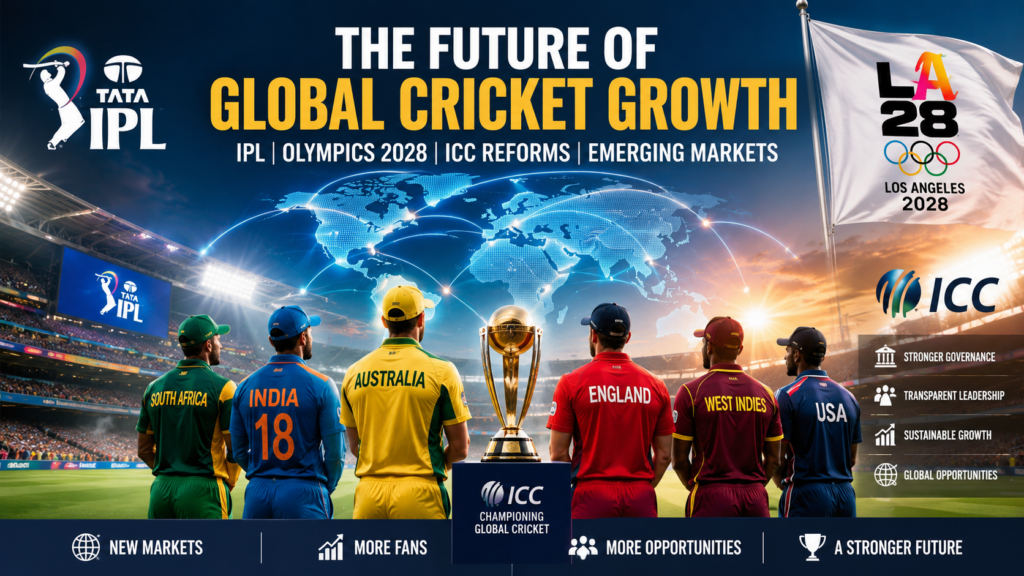
Cricket is entering one of the most transformative phases in its history. Once considered a sport largely concentrated in South Asia, Australia, England, and a few Commonwealth nations, cricket is now positioning itself as a truly global sport. Several developments in 2026 have highlighted this shift, including cricket’s return to the Olympics at Los Angeles 2028, the International Cricket Council’s (ICC) governance reforms, and increasing recognition of cricket leaders on the global stage. Together, these milestones indicate that the future of cricket is not just about expanding fan bases but also about strengthening governance, commercial growth, and international accessibility.
Cricket’s Olympic Return: A Historic Opportunity
One of the biggest catalysts for global cricket growth is the sport’s inclusion in the Los Angeles 2028 Olympic Games. According to former South African captain Graeme Smith, the Olympics could provide cricket with unprecedented exposure in markets where the sport has traditionally struggled to gain traction. Smith emphasized that the Olympic platform has the potential to introduce cricket to millions of new fans, particularly in North America and other emerging sporting markets.
The significance of LA 2028 extends beyond a single tournament. Olympic participation provides cricket with global visibility, attracts new sponsors, and creates opportunities for governments and sports organizations to invest in grassroots development. With only six men’s and six women’s teams expected to participate, the event is likely to showcase the highest level of competition while creating excitement among new audiences.
IPL’s Influence on Global Cricket Expansion
The Indian Premier League (IPL) remains the most influential force in modern cricket. Graeme Smith recently described the IPL as the foundation of the global franchise cricket revolution, highlighting how it has transformed player development, broadcasting, sponsorship, and fan engagement worldwide.
The IPL’s success has inspired the emergence of new franchise leagues such as SA20, Major League Cricket in the United States, and various T20 competitions across the world. These leagues have created year-round cricket ecosystems, enabling players from different nations to compete together while attracting new audiences.
From a business perspective, the IPL has demonstrated how cricket can compete with other global sports for sponsorship revenue and media rights. The league’s commercial success continues to serve as a blueprint for cricket boards seeking sustainable growth models.
Stronger Governance Through ICC Reforms
For any sport to grow globally, strong governance is essential. In May 2026, the ICC appointed Dr. Ros Rivaz as its Independent Director, a move widely viewed as an effort to strengthen governance, accountability, and strategic oversight. Rivaz brings extensive leadership experience from major international organizations and is expected to contribute significantly to cricket’s long-term development strategy.
As cricket expands into new regions, governance challenges become increasingly complex. Issues such as tournament scheduling, revenue distribution, player welfare, and integrity management require professional oversight. The appointment of independent leadership figures reflects the ICC’s commitment to building a modern governance framework capable of supporting global expansion.
Strong governance will also play a critical role in ensuring that smaller cricketing nations benefit from the sport’s growth rather than being overshadowed by traditional powerhouses.
Jay Shah’s Growing Global Recognition
Another noteworthy development is ICC Chairman Jay Shah’s inclusion in the World Economic Forum’s Young Global Leaders Class of 2026. This recognition reflects not only his influence within cricket administration but also the increasing relevance of sports governance in broader global leadership discussions.
Under Shah’s leadership, the ICC has actively pursued initiatives aimed at expanding cricket’s international footprint. His advocacy for cricket’s Olympic inclusion, focus on women’s cricket development, and efforts to enter new global markets have contributed to cricket’s evolving growth strategy.
While challenges remain, the recognition from the World Economic Forum highlights how cricket’s leadership is increasingly engaging with international institutions and broader economic discussions.
Emerging Markets Will Define the Next Decade
The future growth of cricket will depend heavily on emerging markets such as the United States, Europe, the Middle East, and parts of Africa. The combination of Olympic exposure, franchise leagues, digital broadcasting, and social media has created opportunities to reach audiences beyond cricket’s traditional strongholds.
Major League Cricket in the United States is already demonstrating the potential of the North American market. Similarly, increased investment in women’s cricket and youth development programs is helping broaden the sport’s appeal globally.
Technology will also play a vital role. Streaming platforms, AI-powered analytics, fan engagement applications, and digital content ecosystems are making cricket more accessible than ever before. These innovations can help cricket compete for attention in an increasingly crowded sports marketplace.
Final Thoughts
The future of global cricket growth looks exceptionally promising. The return of cricket to the Olympics, the continuing influence of the IPL, governance improvements within the ICC, and the emergence of globally recognized cricket leaders collectively signal a new era for the sport. While challenges related to governance, scheduling, and competitive balance remain, the foundations for long-term international growth are stronger than ever.
If these initiatives are executed effectively, cricket could evolve from a sport dominated by a handful of nations into a genuinely global game with a diverse fan base, stronger commercial opportunities, and a permanent place among the world’s leading sports.
FAQs
1. Why is LA 2028 important for cricket?
LA 2028 marks cricket’s return to the Olympic Games after more than a century, providing exposure to new global audiences and creating growth opportunities in emerging markets.
2. How has the IPL contributed to global cricket growth?
The IPL has revolutionized franchise cricket by attracting major investments, global audiences, and inspiring similar leagues around the world.
3. Who is Dr. Ros Rivaz?
Dr. Ros Rivaz is the ICC’s newly appointed Independent Director, tasked with strengthening governance and supporting the organization’s global growth strategy.
4. Why was Jay Shah recognized by the World Economic Forum?
Jay Shah was named to the Young Global Leaders Class of 2026 for his contributions to cricket administration and efforts to expand the sport internationally.
5. Which regions offer the biggest growth opportunities for cricket?
The United States, Europe, the Middle East, and emerging African markets are considered key regions for cricket’s future expansion.