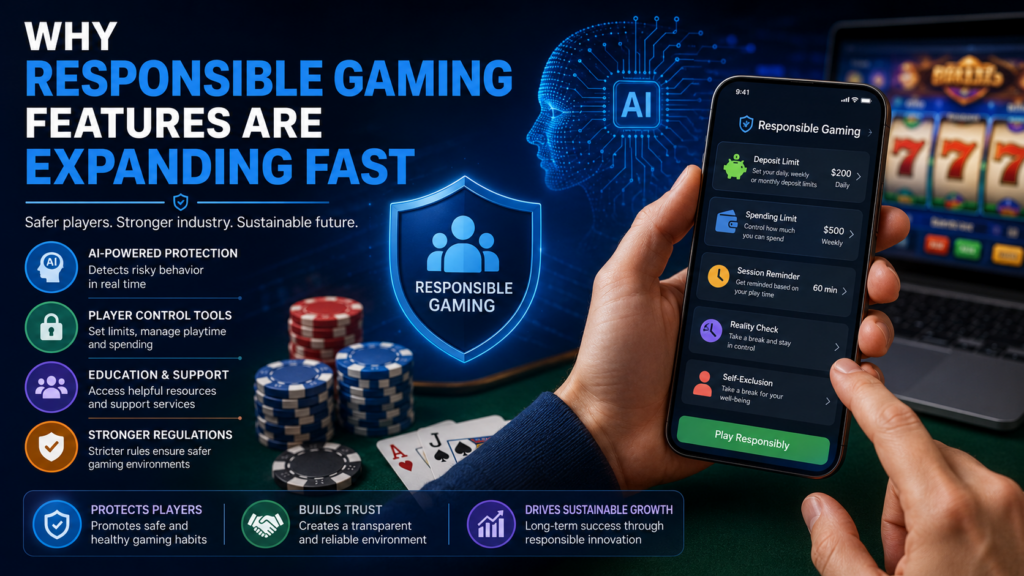

Why Responsible Gaming Features Are Expanding
The online gambling industry has evolved significantly over the past decade. What was once a niche form of entertainment has become a global digital market attracting millions of players every day. As the industry continues to grow, operators, regulators, and technology providers are placing greater emphasis on responsible gaming to ensure that player safety remains a top priority.
Today, responsible gaming is no longer viewed as a regulatory checkbox. Instead, it has become a core component of sustainable business growth, player trust, and long-term industry success. From advanced monitoring systems to educational initiatives and AI-driven risk detection tools, the gambling sector is investing heavily in solutions designed to protect users and encourage safer gambling habits.
The Rising Importance of Responsible Gaming
The popularity of online casinos, sportsbooks, and gaming platforms has created new opportunities for entertainment and revenue generation. However, this growth has also increased concerns regarding gambling-related harm, financial losses, and addictive behavior.
As more jurisdictions legalize online gambling, regulators are demanding stronger player protection measures. At the same time, operators are recognizing that creating a safer gaming environment benefits both players and businesses.
The increasing focus on responsible gaming reflects a broader industry shift toward accountability and sustainability. Rather than simply attracting new customers, operators are now focused on maintaining healthy, long-term relationships with players.
According to an online gambling industry analysis, the global gambling market continues to expand, making responsible gaming measures more important than ever before.
Regulators Are Strengthening Player Protection
Government regulators have become key drivers behind the expansion of responsible gaming features. Regulatory bodies around the world are introducing stricter guidelines designed to educate players, prevent gambling-related harm, and provide support resources for those who may be at risk.
A recent example comes from the responsible gaming resources launched by the Michigan Gaming Control Board. The expanded platform provides educational content, prevention strategies, self-help tools, and direct access to support services for individuals affected by gambling-related issues.
These initiatives demonstrate how regulators are moving beyond enforcement and focusing on proactive prevention. By making information more accessible, regulatory agencies hope to encourage healthier gambling behaviors while reducing the stigma associated with seeking help.
Artificial Intelligence Is Changing Responsible Gaming
Technology is playing a major role in the evolution of responsible gaming, particularly through the use of artificial intelligence.
Modern AI systems can analyze player behavior in real time and identify patterns that may indicate problematic gambling activity. This allows operators to intervene earlier and provide support before harmful behaviors escalate.
The adoption of AI-powered responsible gaming tools highlights how advanced technology is helping companies create safer gambling environments.
These systems can:
- Detect unusual gambling patterns.
- Monitor changes in player behavior.
- Deliver personalized responsible gaming messages.
- Encourage players to set spending and time limits.
- Identify individuals who may benefit from additional support.
Unlike traditional monitoring methods, AI-driven solutions offer continuous analysis and can respond much faster to potential risks. As technology continues to improve, AI is expected to become one of the most effective tools for promoting responsible gambling practices.
Responsible Gaming Is Becoming Part of Product Design
Another reason responsible gaming features are expanding is that operators are integrating them directly into their products and platforms.
Historically, responsible gaming tools were often treated as separate compliance features. Today, many gambling companies are embedding player protection measures into the overall user experience.
For example, Caesars Entertainment’s latest online gaming innovation reflects the broader industry trend of combining engaging gaming experiences with responsible gambling initiatives.
Many leading operators now offer features such as:
- Deposit limits
- Spending controls
- Reality checks
- Session reminders
- Self-exclusion options
- Cooling-off periods
These tools empower players to maintain control over their gambling activity while creating a more transparent and trustworthy gaming environment.
Growing Regulatory Pressure Is Driving Innovation
Compliance requirements are becoming increasingly complex across global gambling markets. Regulators expect operators to demonstrate that they are actively protecting consumers rather than simply reacting to issues after they occur.
As a result, gambling companies are investing in innovative solutions that help them meet regulatory expectations while improving player experiences.
Responsible gaming has become a competitive advantage. Operators that prioritize player welfare often build stronger reputations, attract more loyal customers, and establish greater trust within regulated markets.
The industry is beginning to recognize that long-term success depends on balancing profitability with social responsibility.
Building Long-Term Trust With Players
Trust remains one of the most valuable assets in the online gambling sector. Players are more likely to engage with platforms that demonstrate transparency, fairness, and a commitment to responsible gaming.
Features such as self-exclusion programs, educational resources, affordability tools, and AI-driven behavioral monitoring help create a safer environment for users. These initiatives not only protect players but also strengthen confidence in the industry as a whole.
As competition continues to increase, operators that invest in responsible gaming will likely be better positioned to achieve sustainable growth while maintaining strong customer relationships.
FAQs
What is responsible gaming?
Responsible gaming refers to policies, tools, and practices designed to help individuals gamble safely while minimizing the risk of gambling-related harm.
Why are responsible gaming features becoming more common?
The rapid growth of online gambling, increased regulatory oversight, and greater awareness of player protection have encouraged operators to invest in responsible gaming solutions.
How does AI help promote responsible gaming?
AI analyzes player behavior patterns and identifies potential warning signs of risky gambling activity. This allows operators to provide timely interventions and support.
What are the most common responsible gaming tools?
Popular responsible gaming features include deposit limits, session reminders, reality checks, self-exclusion programs, cooling-off periods, and spending controls.
Why do gambling operators invest in responsible gaming?
Responsible gaming helps operators comply with regulations, improve player trust, strengthen brand reputation, and support long-term business sustainability.
Final Thoughts
The expansion of responsible gaming features represents one of the most important developments in the modern gambling industry. As online gambling continues to grow, operators, regulators, and technology providers are working together to create safer and more responsible gaming environments.
From stronger educational initiatives and enhanced player protection resources to advanced AI-powered monitoring systems, responsible gaming is becoming an essential part of the industry’s future. Companies that prioritize player well-being are not only meeting regulatory expectations but also building the trust and credibility needed for long-term success in an increasingly competitive market.